Electric Fireplace Energy Consumption Explained for B2B Buyers
Efficiency, Wattage & Operating Cost for Commercial Applications
As electric fireplaces become increasingly popular across residential, hospitality, and commercial projects, energy consumption and efficiency are now critical evaluation factors for distributors, retailers, and project-based buyers.
For businesses looking to expand an electric fireplace product line or specify electric fireplaces for hotels, serviced apartments, and multi-unit developments, understanding real electricity usage is essential for cost planning, compliance, and long-term operational control.
This guide explains how much electricity electric fireplaces use, how energy efficient they are, and what these figures mean for bulk purchasing and commercial applications.
Do Electric Fireplaces Use a Lot of Electricity?
Energy Consumption in Commercial and Hospitality Use
From a B2B and supplier perspective, the answer is no — when electric fireplaces are used as designed.
Most electric fireplaces operate within a controlled wattage range of 750W to 1500W, comparable to standard electric space heaters. In commercial environments, electric fireplaces are typically applied as supplemental or zone heating solutions, not as primary heat sources.
This results in predictable, manageable electricity consumption, even when deployed across multiple rooms or units.
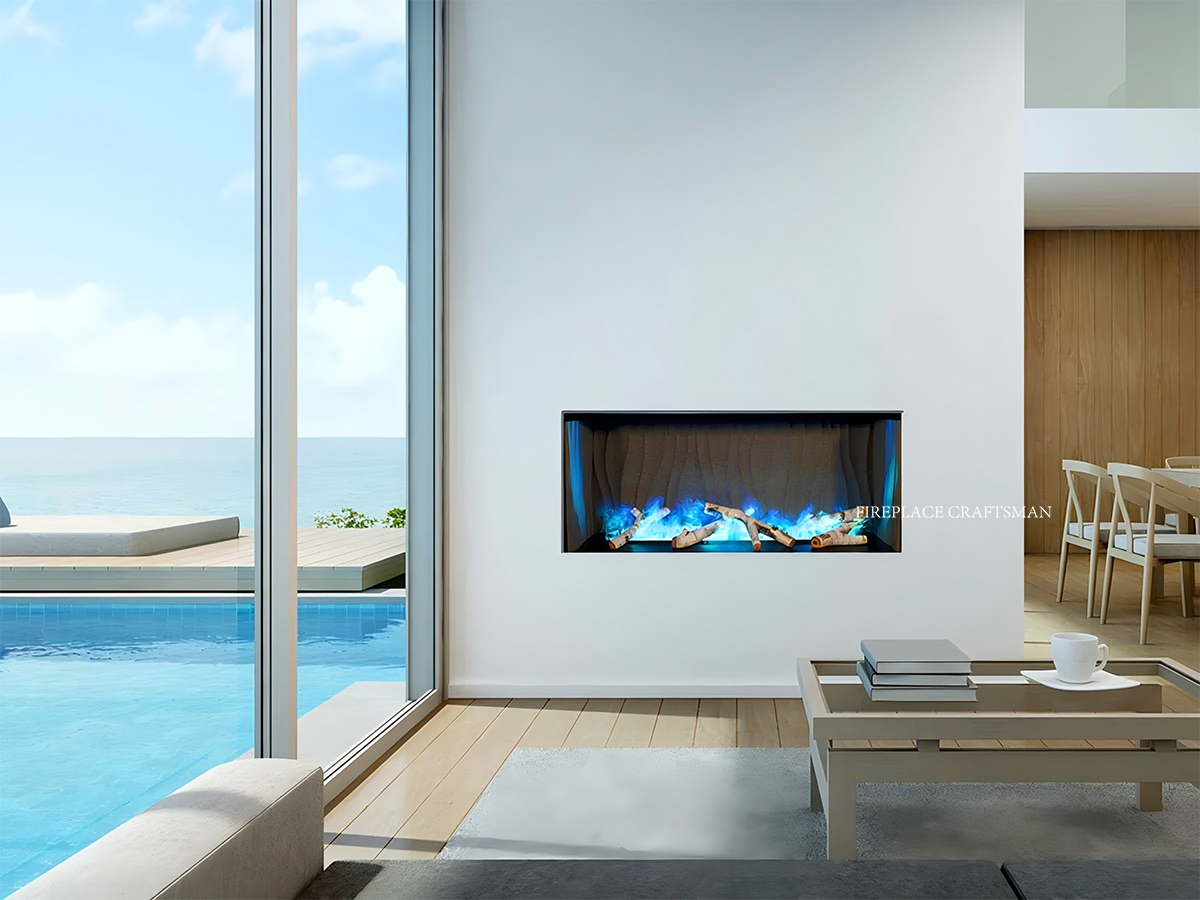
Electric Fireplace Wattage Explained
Low Wattage, Dual Heat Modes, and Flame-Only Operation
Understanding wattage is fundamental for distributors and project planners evaluating energy performance at scale.
|
Operating Mode |
Typical Power Consumption |
|
Flame effect only (no heat) |
50–150W |
|
Low heat mode |
~750W |
|
Full heat mode |
~1500W |
In hospitality and commercial settings, flame-only operation is widely used to create ambiance with minimal electricity usage, while heating functions are activated selectively based on occupancy and comfort requirements.
How Much Electricity Does an Electric Fireplace Use?
Hourly and Monthly Cost for Bulk Installations
To support procurement and facility-level planning, the following estimates are based on average North American electricity rates.
|
Operating Mode |
Approx. Cost per Hour |
Estimated Monthly Cost |
|
Flame only |
$0.01–$0.03 |
$2–$4 |
|
750W heating |
~$0.11 |
~$13 |
|
1500W heating |
~$0.22 |
~$26 |
*Estimated at 4 hours of daily use per unit.
This cost structure allows hotel operators, developers, and property managers to forecast electricity budgets accurately across dozens or even hundreds of installed units.
Are Electric Fireplaces Energy Efficient?
Electric Fireplace Efficiency Compared with Gas and Wood
Yes. Electric fireplaces are among the most energy-efficient fireplace options available.
|
Fireplace Type |
Approximate Energy Efficiency |
|
Electric fireplace |
~100% |
|
Gas fireplace |
70–85% |
|
Wood-burning fireplace |
10–30% |
Electric fireplaces convert nearly all consumed electricity directly into usable heat, with no losses through chimneys or venting systems. This efficiency advantage simplifies compliance and reduces wasted energy in commercial environments.
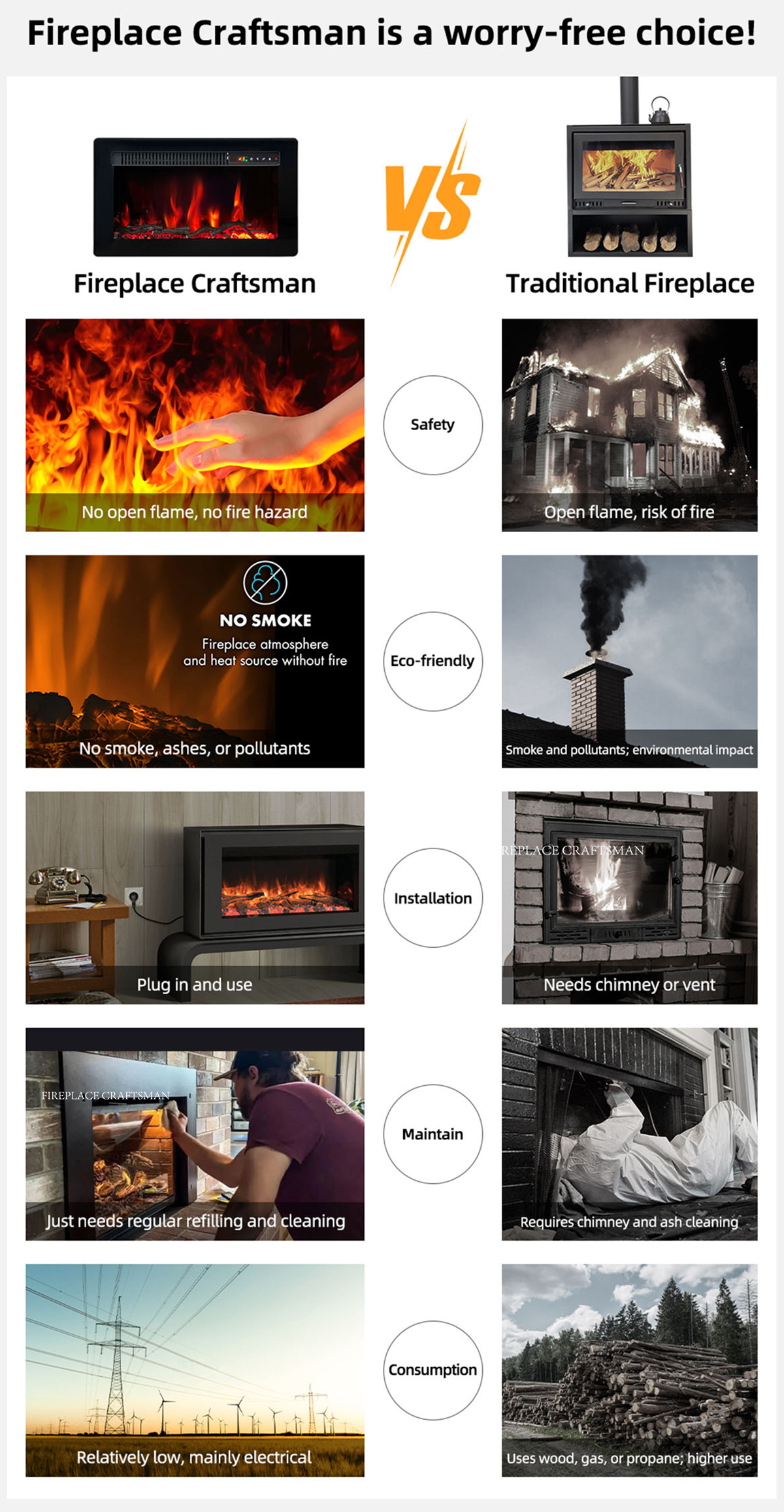
Do Electric Fireplaces Give Off Heat?
Heating Performance and Energy Efficiency in Commercial Spaces
Yes. Most electric fireplaces generate approximately 4,800–5,100 BTUs, suitable for heating 400–500 sq ft as a supplemental heat source.
In commercial and hospitality projects, electric fireplaces are commonly used to:
- 1. Enhance guest comfort in hotel rooms and suites
- 2. Provide localized warmth in lounges and reception areas
- 3. Support zone heating strategies without overloading HVAC systems
They are not intended to replace centralized heating, but they deliver consistent, controlled heat where and when it is needed.
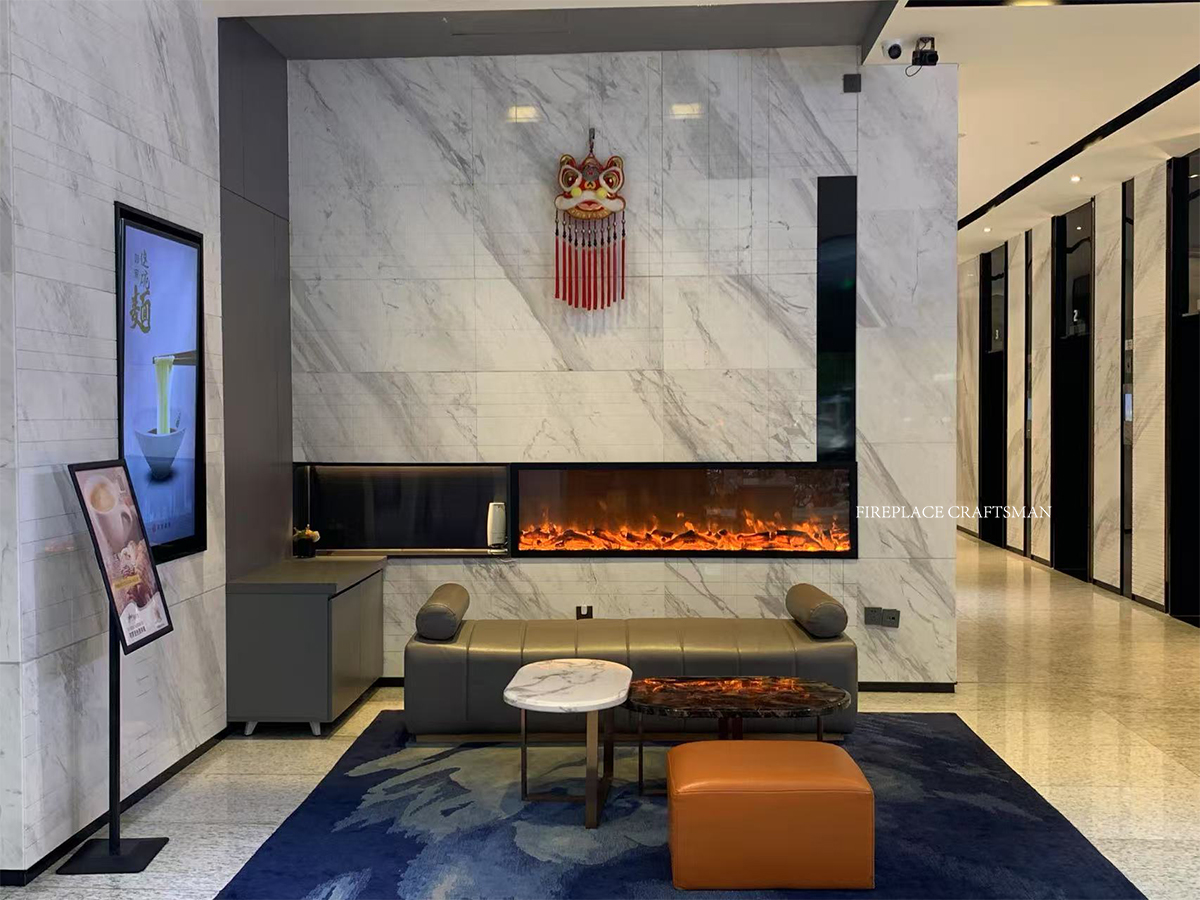
What Is the Most Energy Efficient Electric Fireplace for B2B Projects?
From a B2B purchasing perspective, energy efficiency is not defined by wattage alone.
The most energy-efficient electric fireplaces typically feature:
- 1. Dual heat output options (750W / 1500W)
- 2. Independent flame and heat control
- 3. Built-in thermostats and programmable timers
- 4. Auto shut-off and overheat protection
- 5. Stable performance across production batches
These features allow distributors and project buyers to standardize energy performance across large installations while maintaining flexibility for different use scenarios.
Electric Fireplace Energy Use by Application Scenario
Energy priorities vary by application. Below is a practical overview for common B2B use cases.
Electric Fireplaces for Hotels & Hospitality Projects
Hotels prioritize ambiance, guest experience, and operational cost control.
Energy advantages include:
- 1. Flame-only mode for low-wattage visual appeal
- 2. Guest-controlled heating limits unnecessary usage
- 3. No combustion, venting, or gas infrastructure
- 4. Predictable per-room electricity consumption
For hotel operators, electric fireplaces offer enhanced perceived value without unpredictable energy costs.
Electric Fireplaces for Apartments & Multi-Unit Developments
In residential developments, consistency and compliance are key.
Key benefits include:
- 1. Uniform wattage specifications across units
- 2. Zone heating reduces reliance on central HVAC
- 3. Easy integration into existing electrical systems
- 4. Simplified coordination for large-scale projects
Developers value electric fireplaces for their scalability and energy predictability.
Electric Fireplaces for Retailers & Distribution Programs
For distributors and retailers, energy efficiency is a core sales message.
Clear wattage ratings and operating cost transparency:
- 1. Reduce customer hesitation
- 2. Support premium positioning
- 3. Improve post-sale satisfaction
- 4. Strengthen brand credibility
Energy efficiency becomes a commercial advantage, not just a technical feature.
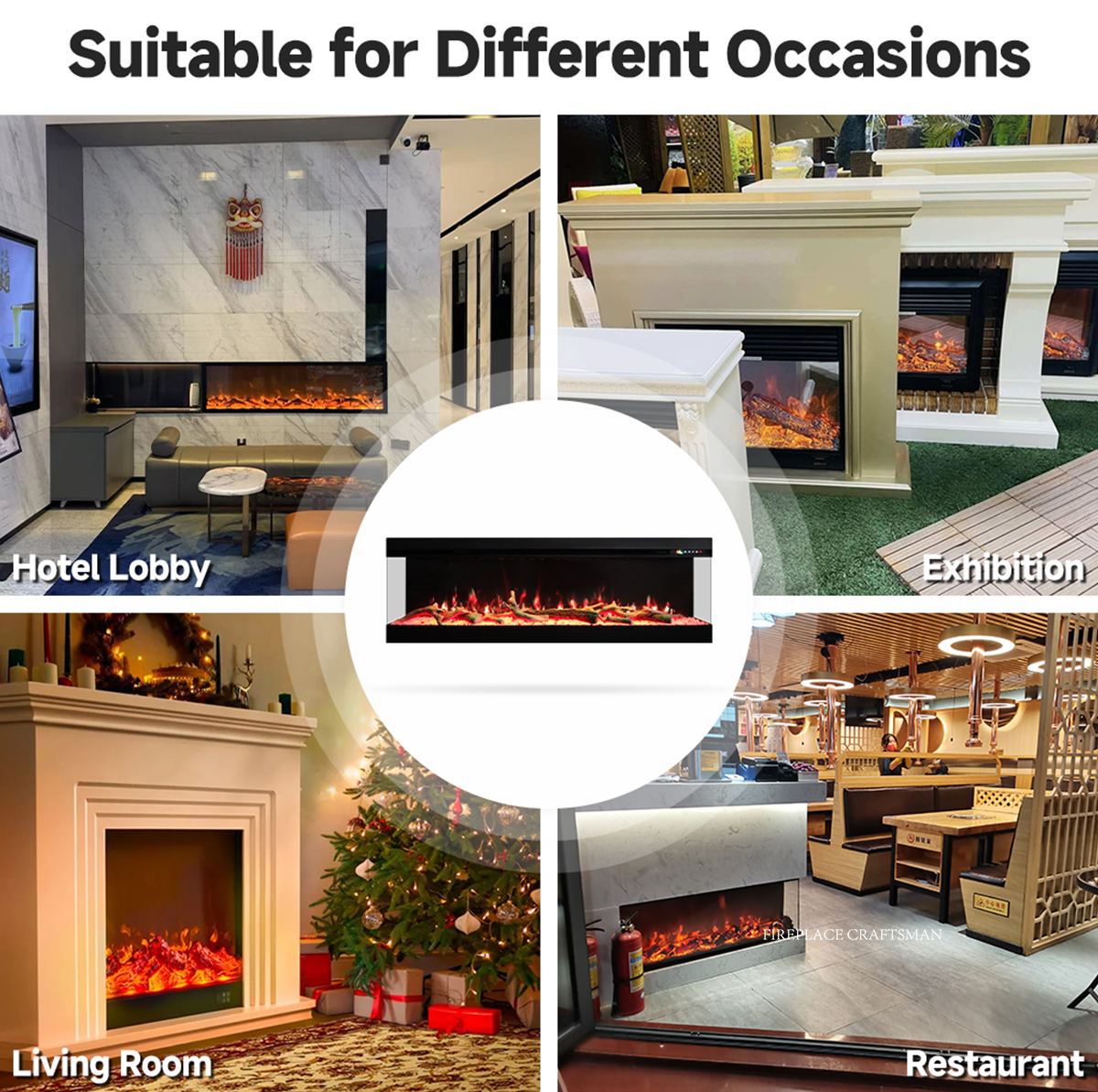
Distributor & Project Buyer FAQ
Electric Fireplace Energy Consumption
Do electric fireplaces use a lot of electricity in bulk installations?
No. When applied as supplemental heating or flame-only installations, energy usage remains controlled and predictable across large quantities.
Can electric fireplaces operate without heat to save energy?
Yes. Most models support independent flame operation at very low wattage.
Are electric fireplaces more energy efficient than gas fireplaces?
Yes. Electric fireplaces offer near 100% point-of-use efficiency, with no venting losses.
How can energy usage be managed across multiple units?
Through thermostats, timers, dual heat settings, and defined usage policies in hospitality environments.
Supplier Perspective: Supporting Energy-Efficient Electric Fireplace Programs
From a manufacturer and supplier standpoint, supporting B2B partners involves more than supplying products.
Energy-efficient programs typically include:
- 1. Stable and consistent wattage specifications
- 2. Compliance with regional energy standards
- 3. Technical documentation for procurement teams
- 4. Customization options for different markets and projects
This ensures electric fireplaces integrate smoothly into commercial energy planning and long-term operations.
Conclusion: Electric Fireplace Energy Use in B2B Applications
So, do electric fireplaces use a lot of electricity?
From a commercial and supplier perspective, they do not.
When properly selected and deployed, electric fireplaces provide:
- 1. Predictable electricity consumption
- 2. High energy efficiency at the point of use
- 3. Scalable solutions for bulk projects
- 4. Flexible integration across hospitality and residential environments
For distributors, retailers, and project buyers, electric fireplace energy efficiency is not a concern — it is a strategic advantage.
Post time: Jan-26-2026